
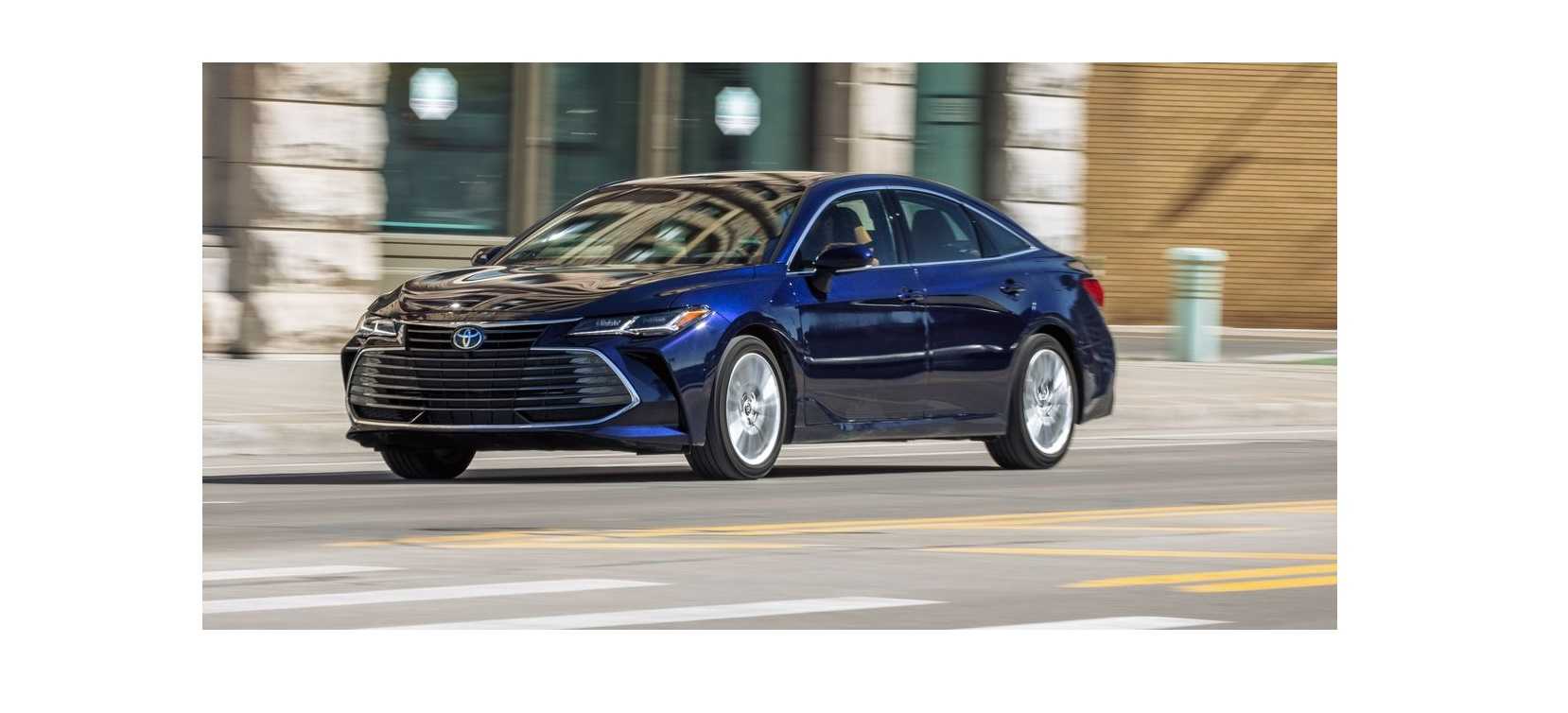

2022 Toyota Avalon Operating The Lights And Wipers User Guide
This article explains how to operate the 2022 Toyota Avalon’s lights and wipers. Learn how to use these features for best visibility and safety in different driving circumstances.
Headlight switch
The headlights can be operated manually or automatically.
Operating instructions
Operating the switch turns on the lights as follows:
Type A
 The headlights, daytime running lights and all the lights listed below turn on and off automatically. (When the engine switch is in IGNITION ON mode)

 The side marker, parking, tail, license plate, instrument panel lights, and daytime running lights turn on.
 The headlights and all the lights listed above (except daytime running lights) turn on.
 The daytime running lights turn off.
Turning on the high beam headlights
- With the headlights on, push the lever away from you to turn on the high beams.
- Pull the lever toward you to the center position to turn the high beams off.
- Pull the lever toward you and release it to flash the high beams once. You can flash the high beams with the headlights on or off.

Cornering lights (if equipped)
- When the steering wheel or turn signal lever is operated while the headlights are on (low beam), a cornering light will turn on and light up the direction of movement of the vehicle. The cornering lights are designed to ensure excellent visibility when making a turn at an intersection.
- However, when vehicle speed is approximately 93 mph (150 km/h) or higher, the cornering lights will not turn on.
- When the shift lever is in R while the headlights are on (low beam), both cornering lights will turn on. This is designed to enhance visibility when parking.
Daytime running light system
Type A:
- The daytime running lights illuminate using the same lights as the low beam headlights and illuminate dimmer than the low beam headlights.
Type B:
- The daytime running lights illuminate using the same lights as the parking lights and illuminate brighter than the parking lights.
- To make your vehicle more visible to other drivers during daytime driving, the daytime running lights turn on automatically when all of the following conditions are met. (The daytime running lights are not designed for use at night.)
- The engine is running
- The parking brake is released
- The headlight switch is in the, (type A only), * (type B and C) position
- When the surroundings are bright
- The daytime running lights remain on after they illuminate, even if the parking brake is set again.
- Type A and B: Daytime running lights can be turned off by operating the switch.
- Compared to turning on the headlights, the daytime running light system offers greater durability and consumes less electricity, so it can help improve fuel economy.
Cornering lights (if equipped)
When the cornering lights are on for more than 30 minutes, they will turn off automatically.
Headlight control sensor (if equipped)
The sensor may not function properly if an object is placed on the sensor, or anything that blocks the sensor is affixed to the windshield. Doing so interferes with the sensor detecting the level of ambient light and may cause the automatic headlight system to malfunction.
Automatic light off system (if equipped)
- When the headlights come on: The headlights and tail lights turn off 30 seconds after a door is opened and closed if the engine switch is turned to ACCESSORY mode or turned off. (The lights turn off immediately if
 on the key is pressed after all the doors are locked.)
- When only the tail lights come on: The tail lights turn off automatically if the engine switch is turned off and the driver’s door is opened. To turn the lights on again, turn the engine switch to IGNITION ON mode, or turn the light switch off and then back toor
- Light reminder buzzer (except when the light switch is in )
- A buzzer sounds when the engine switch is turned off or turned to ACCESSORY mode and the driver’s door is opened while the lights are turned on .
- A buzzer sounds when the engine switch is turned off or turned to ACCESSORY mode and the driver’s door is opened while the lights are turned on
- Windshield wiper linked headlight illumination
- When driving during daytime with the headlight switch turned to, if the windshield wipers are used, the headlights will turn on automatically after several seconds to help enhance the visibility of your vehicle.
- When driving during daytime with the headlight switch turned to
- 12-volt battery-saving function
In the following conditions, the remaining lights will go off automatically after20 minutes in order to prevent the 12-volt battery from being discharged:- The headlights and/or tail lights are on.
- The power switch is in ACCESSORY mode or turned off. This function will be canceled in any of the following situations:
- When the power switch is turned to ON mode.
- When the light switch is operated.
- When a door or the trunk is opened or closed
- Battery-saving function
- In the following conditions, the remaining lights will go off automatically after 20 minutes in order to prevent the vehicle battery from being discharged:
- The headlights and/or tail lights are on.
- The engine switch is in ACCESSORY mode or turned off.
- This function will be canceled in any of the following situations:
- When the engine switch is turned to IGNITION ON mode.
- When the light switch is operated
- When a door or the trunk is opened or closed
- In the following conditions, the remaining lights will go off automatically after 20 minutes in order to prevent the vehicle battery from being discharged:
- Welcome lighting
- If the headlight switch is turned to and the surrounding area is dark, unlocking the doors using the smart key system or wireless remote control will turn the parking lights and tail lights on automatically
Customization
Settings (e.g. light sensor sensitivity) can be changed. (Customizable features:
AHB (Automatic High Beam)
The Automatic High Beam uses a camera sensor located behind the upper portion of the windshield to assess the brightness of the lights of vehicles ahead, streetlights, etc., and automatically turns the high beams on or off as necessary
WARNING
- Limitations of the Automatic High Beam
- Do not overly rely on the Automatic High Beam. Always drive safely, taking care to observe your surroundings and turning the high beams on or off manually if necessary.
- To prevent incorrect operation of the Automatic High Beam system
- Do not overload the vehicle
Activating the Automatic High Beam
-
- Push the lever away from you with the headlight switch in the or position.
- Press the Automatic High Beam switch.

- Push the lever away from you with the headlight switch in the or
Turning the high beam on/off manually
- Switching to low beam
- Press the Automatic High Beam switch. The Automatic High Beam indicator will turn off. Press the switch to activate the Automatic High Beam system again.

- Press the Automatic High Beam switch. The Automatic High Beam indicator will turn off. Press the switch to activate the Automatic High Beam system again.
- Switching to high beam
-
- Push the lever away from you. The Automatic High Beam indicator will turn off and the high beam indicator will turn on.
- Pull the lever to its original position to activate the Automatic High Beam system again

-
- Temporarily switching to the low beams
- Pull the lever toward you and then return it to its original position. The high beams are on while the lever is pulled toward you.
- However, after the lever is returned to its original position, the low beams remain on for a certain amount of time. Afterwards, the Automatic High Beam will be activated again

- Temporarily switching to the low beams
- It is recommended to switch to the low beams when the high beam may cause problems or distress to other drivers or pedestrians nearby.
Conditions to turn the high beams on/off automatically
- When all of the following conditions are met, the high beams will be turned on automatically (after approximately 1 second):
- The vehicle speed is approximately 21 mph (34 km/h) or more.
- The area ahead of the vehicle is dark.
- There are no vehicles ahead with headlights or tail lights turned on.
- There are few streetlights on the road ahead.
If any of the following conditions is met, the high beams will turn off automatically:
- The vehicle speed is below approximately 17 mph (27 km/h).
- The area ahead of the vehicle is not dark.
- Vehicles ahead have their headlights or tail lights turned on.
- There are many streetlights on the road ahead.
Camera sensor detection information
- The high beams may not be automatically turned off in the following situations:
- When a vehicle suddenly appears from around a curve
- When the vehicle is cut in front of by another vehicle
- When vehicles ahead cannot be detected due to repeated curves, road dividers or roadside trees
- When vehicles ahead appear in a faraway lane on a wide road
- When the lights of vehicles ahead are not on
- The high beams may be turned off if a vehicle ahead that is using fog lights without its headlights turned on is detected.
- House lights, street lights, traffic signals, and illuminated billboards or signs and other reflective objects may cause the high beams to change to the low beams, or the low beams to remain on.
- The following factors may affect the amount of time taken for the high beams to turn on or off:
- The brightness of the headlights, fog lights, and tail lights of vehicles ahead
- The movement and direction of vehicles ahead
- When a vehicle ahead only has operational lights on one side
- When a vehicle ahead is a two-wheeled vehicle
- The condition of the road (gradient, curve, condition of the road surface, etc.)
- The number of passengers and amount of luggage in the vehicle
- The high beams may turn on or off unexpectedly.
- Bicycles or similar vehicles may not be detected.
- In the following situations the system may not be able to correctly detect the surrounding brightness level. This may cause the low beams to remain on or the high beams to flash or dazzle pedestrians or vehicles ahead. In such a case, it is necessary to manually switch between the high and low beams. When driving in inclement weather (heavy rain, snow, fog, sandstorms, etc.)
- When the windshield is obscured by fog, mist, ice, dirt, etc.
- When the windshield is cracked or damaged
- When the camera sensor is deformed or dirty
- When the temperature of the camera sensor is extremely high
- When the surrounding brightness level is equal to that of headlights, tail lights or fog lights
- When headlights or tail lights of vehicles ahead are turned off, dirty, changing color, or not aimed properly
- When the vehicle is hit by water, snow, dust, etc. from a preceding vehicle
- When driving through an area of intermittently changing brightness and darkness
- When frequently and repeatedly driving ascending/descending roads, or roads with rough, bumpy or uneven surfaces (such as stone-paved roads, gravel roads, etc.)
- When frequently and repeatedly taking curves or driving on a winding road
- When there is a highly reflective object ahead of the vehicle, such as a sign or mirror
- When the back of a preceding vehicle is highly reflective, such as a container on a truck
- When the vehicle’s headlights are damaged or dirty, or are not aimed properly
- When the vehicle is listing or titling due to a flat tire, a trailer being towed, etc.
- When the headlights are changed between the high beams and low beams repeatedly in an abnormal manner
- When the driver believes that the high beams may be flashing or dazzling pedestrians or other drivers
Temporarily lowering sensor sensitivity
The sensitivity of the sensor can be temporarily lowered.
- Turn the engine switch off while the following conditions are met.
- The headlight switch is in
 or .
- The headlight switch lever is in the high beam position.
- Automatic High Beam switch is on.
- The headlight switch is in
- Turn the engine switch to the IGNITION ON mode.
- Within 60 seconds after , repeat pulling the headlight switch lever to the original position then pushing it to the high beam position quickly 10 times, then leave the lever in the high beam position.
- If the sensitivity is changed, the Automatic High Beam indicator will turn on and off 3 times.
Automatic High Beam (headlights) may turn on even when the vehicle is stopped.
Windshield wipers and washer
Operating the wiper lever
Operating the  lever operates the wipers or washer as follows:
Type A
Wiper intervals can be adjusted for intermittent operation (when is selected).
 Intermittent windshield wiper operation

 Low-speed windshield wiper operation
 High-speed windshield wiper operation
 Temporary operation
Wiper intervals can be adjusted when intermittent operation is selected.
- Increases the intermittent windshield wiper frequency
- Decreases the intermittent windshield wiper frequency


Pulling the lever operates the wipers and washer. Wipers will automatically operate a couple of times after the washer squirts. (After operating several times, the wipers operate once more time after a short delay to prevent dripping. However, the dripping prevention does not operate while the vehicle is moving.)
The windshield wiper and washer can be operated when
The engine switch is in IGNITION ON mode.
If no windshield washer fluid sprays
Check that the washer nozzles are not blocked if there is washer fluid in the washer fluid reservoir.
When stopping the engine in an emergency while driving
If the windshield wipers are operating when the engine is stopped, the windshield wipers will operate in high speed operation. After the vehicle is stopped, operation will return to normal when the engine switch is turned to IGNITION ON mode, or operation will stop when the driver’s door is opened.
WARNING
Caution regarding the use of washer fluid When it is cold, do not use the washer fluid until the windshield becomes warm. The fluid may freeze on the windshield and cause low visibility. This may lead to an accident, resulting in death or serious injury.
NOTICE
- When the windshield is dry
- Do not use the wipers, as they may damage the windshield.
- When the washer fluid tank is empty
- Do not operate the switch continually as the washer fluid pump may overheat.
- When a nozzle becomes blocked
- In this case, contact your Toyota dealer.
- Do not try to clear it with a pin or other object. The nozzle will be damaged.
Changing the windshield wiper rest position/Lifting the windshield wipers
When the windshield wipers are not being used, they retract to below the hood. To enable the windshield wipers to be lifted when parking in cold conditions or when replacing a windshield wiper insert, change the rest position of the windshield wipers to the service position using the wiper lever
Raising the wipers to the service position
Within approximately 45 seconds of turning the engine switch off, move the wiper lever to the MIST *1 or *2 position and hold it for approximately 2 seconds or more. The wipers will move to the service position.

Lifting the windshield wipers
While holding the hook portion of the wiper arm, lift the windshield wiper from the windshield.
Lowering the windshield wipers to the retracted position
With the windshield wipers placed on the windshield, turn the engine switch to IGNITION ON mode and then move the wiper lever to an operating position. When the wiper switch is turned off, the windshield wipers will stop at the retracted position.
NOTICE
- When lifting the windshield wipers
- Do not lift the windshield wipers when they are in the retracted position below the hood. Otherwise, they may contact the hood, possibly resulting in damage to a windshield wiper and/or the hood.
- Do not operate the wiper lever when the windshield wipers are lifted. Otherwise, the windshield wipers may contact the hood, possibly resulting in damage to the windshield wipers and/or hood.
FAQ
Typically, there’s a control stalk or dial on the left side of the steering column. Turning or toggling it will activate the lights.
The same stalk used for headlights can usually be pushed forward to activate high beams. Pulling it towards you often flashes the high beams without keeping them on.
Some trims might come with rain-sensing wipers that activate and adjust speed based on rainfall intensity.
Pressing or pulling the wiper control stalk towards you typically activates the windshield washer.
Daytime running lights are designed to come on automatically when the vehicle is started and in gear, enhancing visibility during the day.
Useful Links
View Full PDF: 2022 Toyota Avalon Hybrid User Guide | Auto User Guide
2022 Toyota Avalon Hybrid Driving procedures User Guide
2023 Toyota Camry Specs, Price, Features and Mileage (Brochure)