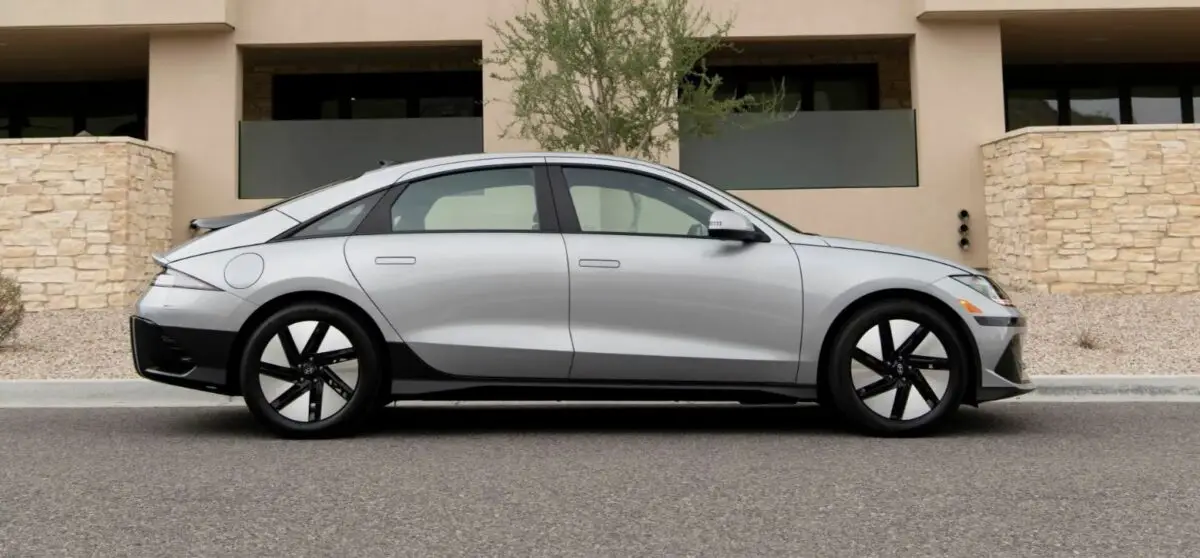

2024 Hyundai Ioniq 6 Seat Belts Owner’s Manual
In the evolution of automotive safety, the 2024 Hyundai Ioniq 6 stands as a testament to the relentless pursuit of excellence, particularly evident in its meticulously engineered seat belt system. Beyond mere restraints, these belts serve as guardians of life, seamlessly integrating advanced technology with ergonomic design to ensure occupants are enveloped in a cocoon of protection. As we embark on a journey into the heart of Hyundai’s commitment to safety, we unravel the intricacies of the Ioniq 6’s seat belts, exploring not just their robust construction and intuitive functionality, but also the ethos of innovation and care that underscores every thread. Join me as we delve into the anatomy of safety, where form meets function in perfect harmony, symbolizing Hyundai’s unwavering dedication to safeguarding lives on the road.
2023 – 2024 Hyundai IONIQ 6 Review, Price, Features And Mileage (Brochure)
Hyundai 2024 Seat Belts
This section describes how to use the seat belts properly. It also describes some of the things not to do when using seat belts.
Seat Belt Safety Precautions
Always fasten your seat belt and make sure all passengers have fastened their seat belts before starting any trip. Airbags are designed to supplement the seat belt as an additional safety device, not a replacement. Most states require all occupants of a vehicle to wear seat belts.
WARNING
Seat belts must be used by ALL passengers whenever the vehicle is moving. Take the following precautions when adjusting and wearing seat belts:
- Children under the age of 13 should be properly restrained in the rear seats.
- Never allow children to ride in the front passenger seat, unless the airbag is deactivated. If a child is seated in the front passenger seat, move the seat as far back as possible. And the child must always be restrained in the seat properly.
- NEVER allow an infant or child to be carried on an occupant’s lap.
- NEVER ride with the seatback reclined when the vehicle is moving.
- Do not allow children to share a seat or seat belt.
- Do not wear the shoulder belt under your arm or behind your back.
- NEVER wear a seat belt over fragile objects. If there is a sudden stop or impact, the seat belt can damage it.
- Do not use the seat belt if it is twisted. A twisted seat belt will not protect you properly in an accident.
- Do not use a seat belt if the webbing or hardware is damaged.
- Do not latch the seat belt into the buckles of other seats.
- NEVER unfasten the seat belt while driving. This may cause loss of vehicle control resulting in an accident.
- Make sure there is nothing in the buckle interfering with the seat belt latch mechanism because any materials in the buckle can cause the seat belt not to be fastened securely.
- No modifications or additions should be made by the user which will either prohibit the seat belt adjusting devices from operating to remove slack, or prohibit the seat belt assembly from being adjusted to remove slack.
WARNING
Damaged seat belts and seat belt assemblies will not operate properly. Always replace:
- Frayed, contaminated, or damaged webbing.
- Damaged hardware.
- The entire seat belt assembly after it has been worn in an accident, even if damage to webbing or assembly is not apparent.
Seat Belt Warning Light
Driver’s seat belt warning
Instrument cluster
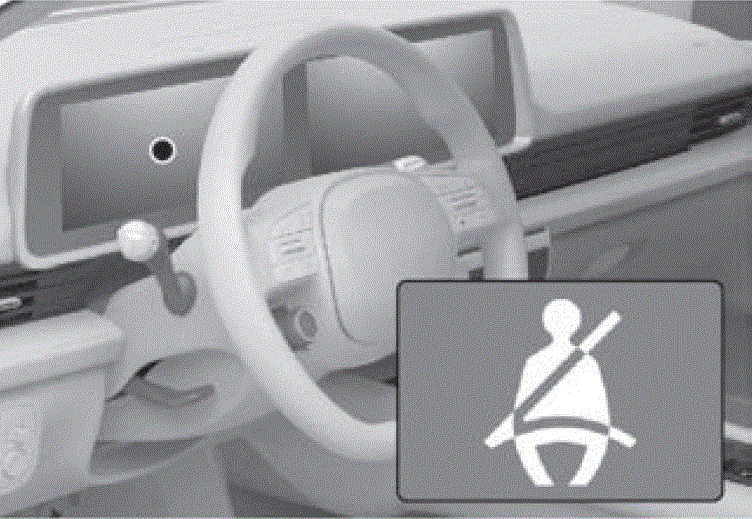
As a reminder to the driver, the driver’s seat belt warning lights will illuminate for approximately 6 seconds each time the Start/Stop button is in the ON position regardless of belt fastening. If the seatbelt is not fastened, the warning chime will sound for about 6 seconds.
If you start to drive without the seat belt fastened or you unfasten the seat belt when you drive under 12 mph (20 km/h) or stop, the corresponding warning light will illuminate.
If you start to drive without the seat belt fastened or you unfasten the seat belt when you drive 12 mph (20 km/h) and faster, the warning light will blink and a warning chime will sound for approximately 100 seconds.
When the seat belt is unfastened during driving, the warning light will illuminate when the speed is under 12 mph (20 km/h).
When the speed is 12 mph (20 km/h) or faster, the warning light will blink and a warning chime will sound for approximately 100 seconds.
Front passenger’s seat belt warning
As a reminder to the front passenger, the front passenger’s seat belt warning lights will illuminate for approximately 6 seconds each time the Start/Stop button is in the ON position regardless of belt fastening.
If you start to drive without the seat belt fastened or you unfasten the seat belt when you drive under 12 mph (20 km/h) or stop, the corresponding warning light will illuminate.
If you start to drive without the seat belt fastened or you unfasten the seat belt when you drive 12 mph (20 km/h) and faster, the warning light will blink and a warning chime will sound for approximately 100 seconds.
When the seat belt is unfastened during driving, the warning light will illuminate when the speed is under 12 mph (20 km/h). When the speed is 12 mph (20 km/h) or faster, the warning light will blink and a warning chime will sound for approximately 100 seconds.
WARNING
Riding in an improper position adversely affects the front passenger’s seat belt warning system. The driver needs to instruct the passenger to properly be seated as instructed in this manual.
Information
- Although the front passenger seat is not occupied, the seat belt warning light will blink or illuminate for 6 seconds.
- The front passenger’s seat belt warning may operate when luggage is placed on the front passenger seat.
Rear passenger’s seat belt warning
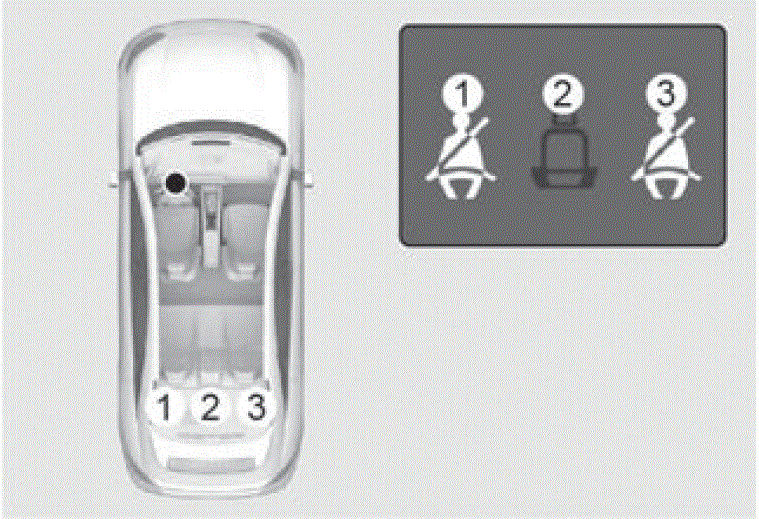
For rear left and right side seat
- As a reminder to the rear passenger, the rear passenger’s seat belt warning lights will illuminate for about 6 seconds each time the Start/Stop button is in the ON position regardless of belt fastening.
- If you unfasten the seat belt when you drive under 12 mph (20 km/h), the corresponding warning light will continue to illuminate until you fasten the seat belt.
- If you unfasten the seat belt when you drive 12 mph (20 km/h) and faster, the seat belt warning chime will sound for about 35 seconds and the corresponding warning light will blink.
- When the seat belt is unfastened during driving, the warning lights will illuminate when the speed is under 12 mph (20 km/h).
- When the speed is 12 mph (20 km/h) and faster, the warning light will blink and warning chime will sound for about 35 seconds.
For rear center seat
- As a reminder to the rear passenger, the rear passenger’s seat belt warning lights will illuminate for about 6 seconds each time the Start/Stop button is in the ON position regardless of belt fastening.
• If you unfasten the seat belt when you drive under 12 mph (20 km/h), the corresponding warning light will continue to illuminate for about 70 seconds. - If you unfasten the seat belt when you drive over 12 mph (20 km/h), the seat belt warning chime will sound for about 35 seconds and the corresponding warning light will blink.
- If the rear door is opened under 6 mph (10 km/h), warning light and warning sound does not work even if driving over 12 mph (20 km/h).
Seat Belt Restraint System
WARNING

Improperly positioned seat belts may increase the risk of serious injury in an accident. Take the following precautions when adjusting the seat belt:
- Position the lap portion of the seat belt as low as possible across your hips, not on your waist, so that it fits snugly. This allows your strong pelvic bones to absorb the force of the crash, reducing the chance of internal injuries.
- Position one arm under the shoulder belt and the other over the belt, as shown in the illustration.
- Always position the shoulder belt anchor into the locked position at the appropriate height.
- Never position the shoulder belt across your neck or face.
Driver’s Seat Belt – 3-point system with emergency locking retractor
To fasten your seat belt:

Pull it out of the retractor and insert the metal tab (1) into the buckle (2). An audible “click” sounds when the tab locks into the buckle. Make sure the seat belt is not twisted.

Place the lap belt (1) portion across your hips and the shoulder belt (2) portion across your chest.
The seat belt automatically adjusts to the proper length after the lap belt portion is adjusted manually so that it fits snugly around your hips.
If you lean forward in a slow, easy motion, the belt extends and moves with you. If there is a sudden stop or collision, the belt is locked in place. It also locks if you try to lean forward too quickly.
Height adjustment
You can adjust the height of the shoulder belt anchor to one of the four different positions for maximum comfort and safety.
The shoulder portion should be adjusted so it lies across your chest and midway over your shoulder nearest the door, not over your neck.
Front seat

To adjust the height of the seat belt anchor, lower or raise the height adjuster into an appropriate position.
To raise the height adjuster, pull it up (1). To lower it, push it down (3) while pressing the height adjuster button (2).
Release the button to lock the anchor into position. Try sliding the height adjuster to make sure that it has locked into position.
To release your seat belt:

Press the release button (1) in the locking buckle.
The belt should automatically draw back into the retractor. If this does not happen, check the belt is not twisted, then try again.
Rear Seat Belts – 3-point system with convertible locking retractor
This type of seat belt combines both an emergency locking retractor and an automatic locking retractor. Convertible retractor type seat belts are installed in the rear seat positions to help accommodate the installation of child restraint systems.
A convertible retractor is also installed in the front passenger seat position, children should always be seated in the rear and never place any infant/child restraint system in the front seat.
To fasten your seat belt
Pull the seat belt out of the retractor and insert the metal tab into the buckle. An audible “click” sounds when the tab locks into the buckle. Pull the shoulder portion of the belt to snug the belt across your hips and remove slack. Make sure the seat belt is not twisted. When not securing a child restraint, the seat belt automatically adjusts to the proper length only after the lap belt portion of the seat belt is adjusted manually so that it fits snugly across your hips.
When the seat belt has been fully extended from the retractor to allow for the installation of a child restraint system, the seat belt operation changes to allow the belt to retract, but not to extend
(Automatic Locking Retractor Type). For more information, refer to the “Child Restraint System (CRS)” section in this chapter.
To release your seat belt:
Press the release button (1) in the locking buckle.
The belt should automatically draw back into the retractor. If this does not happen, check the belt is not twisted, then try again.
Information
- The emergency locking mode allows seated passengers to move freely in their seats while keeping some tension on the belt. During a collision or sudden stop, the retractor automatically locks the belt to help restrain the passengers.
- To deactivate the automatic locking mode, unbuckle the seat belt and allow the belt to fully retract.
Rear center seatbelt (3-point rear center seat belt)

Insert the tongue plate (1) into the buckle until an audible “click” is heard, indicating the latch is locked. Pull the shoulder portion of the belt to snug the belt across your hips and remove slack.
Make sure the seat belt is not twisted.
When using the rear center seat belt, use the buckle with the “CENTER” mark.
Information
If you cannot pull out the safety belt from the retractor, firmly pull the belt out and release it. After release, pull out the belt smoothly.
WARNING
Make sure that the seatback is locked in place when using the rear center seat belt.
If not, the seatback may move when there is a sudden stop or collision, which could result in serious injury.
Pretensioner seat belt

(1) Retractor Pretensioner
Your vehicle is equipped with driver’s and front passenger’s and rear passengers Pretensioner Seat Belts (Retractor Pretensioner). The purpose of the pretensioner is to make sure the seat belts fit tightly against the occupant’s body in certain frontal or side collision(s). The Retractor Pretensioner may be activated in certain crashes where the frontal collision(s) is severe enough.
When the vehicle stops suddenly, or if the occupant tries to lean forward too quickly, the seat belt retractor will lock into position. In certain frontal or side collision(s), the pretensioner will activate and pull the seat belt into tighter contact against the occupant’s body.
If the system senses excessive tension on the driver or passenger’s seat belt when the pretensioner system activates, the load limiter inside the retractor pretensioner will release some of the pressure on the affected seat belt.
WARNING
- Always wear your seat belt and sit properly in your seat.
- Do not use the seat belt if it is loose or twisted. A loose or twisted seat belt will not protect you properly in an accident.
- Do not place anything near the buckle. This may adversely affect the buckle and cause it to function improperly.
- Always replace your pretensioners after activation or an accident.
- NEVER inspect, service, repair or replace the pretensioners yourself. Have the pretensioners inspected, serviced, repaired or replaced by an authorized HYUNDAI dealer.
- Do not hit the seat belt assemblies.
The purpose of the retractor pre-tensioner is to make sure that the shoulder belts fit in tightly against the occupant’s upper body in certain frontal or side collision(s).
If the system senses excessive tension on the driver or passenger’s seat belt when the pre-tensioner system activates, the load limiter inside the retractor pre-tensioner will release some of the pressure on the affected seat belt.
WARNING
- Always wear your seat belt and sit properly in your seat.
- Do not use the seat belt if it is loose or twisted. A loose or twisted seat belt will not protect you properly in an accident.
- Do not place anything near the buckle. This may adversely affect the buckle and cause it to function improperly.
- Always replace your pre-tensioners after activation or an accident.
- NEVER inspect, service, repair or replace the pre-tensioners yourself. Have the pre-tensioners inspected, serviced, repaired or replaced by an authorized HYUNDAI dealer.
- Do not hit the seat belt assemblies.
WARNING
Do not touch the pre-tensioner seat belt assemblies for several minutes after they have been activated. When the pre-tensioner seat belt mechanism deploys during a collision, the pre-tensioner can become hot and can burn you.
CAUTION
Bodywork on the front area of the vehicle may damage the pre-tensioner seat belt system. Therefore, have the system serviced by an authorized HYUNDAI dealer.


The PreTensioner Seat Belt System consists mainly of the following components. Their locations are shown in the illustration above:
- SRS airbag warning light
- Retractor pretensioner
- SRS control module
- Rear retractor pretensioner
NOTICE
The sensor that activates the SRS control module is connected with the pre-tensioner seat belts. The SRS airbag warning light on the instrument cluster will illuminate for approximately 3~6 seconds after the Start/Stop button is in the ON position, and then it should turn off.
If the pre-tensioner is not working properly, the warning light will illuminate even if the SRS airbag is not malfunctioning. If the warning light does not illuminate, stays illuminated or illuminates when the vehicle is being driven, have the pre-tensioner seat belts and/or SRS control module be inspected by an authorized HYUNDAI dealer as soon as possible.
Information
- Pre-tensioner seat belts may be activated in certain frontal or side collisions or rollover situations.
- When the pre-tensioner seat belts are activated, a loud noise may be heard and fine dust, which may appear to be smoke, may be visible in the passenger compartment. These are normal operating conditions and are not hazardous.
- Although it is non-toxic, the fine dust may cause skin irritation and should not be inhaled for prolonged periods. Wash all exposed skin areas thoroughly after an accident in which the pre-tensioner seat belts were activated.
Additional Seat Belt Safety Precautions
Seat belt use during pregnancy
The seat belt should always be used during pregnancy. The best way to protect your unborn child is to protect yourself by always wearing a seat belt.
Pregnant women should always wear a lap-shoulder seat belt. Place the shoulder belt across your chest, routed between your breasts and away from your neck. Place the lap belt below your belly so that it fits SNUGLY across your hips and pelvic bone, under the rounded part of the belly.
WARNING
To reduce the risk of serious injury or death to an unborn child during an accident, pregnant women should NEVER place the lap portion of the seat belt above or over the area of the abdomen where the unborn child is located.
Seat belt use and children
Infants and small children
Most states have Child Restraint System laws that require children to travel in approved Child Restraint System devices, including booster seats. The age at which seat belts can be used instead of the Child Restraint System differs among states, so you should be aware of the specific requirements in your state, and where you are travelling. Infant and Child Restraint Systems must be properly placed and installed in a rear seat.
For more information refer to the “Child Restraint System (CRS)” section in this chapter.
WARNING
ALWAYS properly restrain infants and small children in a Child Restraint System appropriate for the child’s height and weight.
To reduce the risk of serious injury or death to a child and other passengers, NEVER hold a child in your lap or arms when the vehicle is moving. The violent forces created during an accident will tear the child from your arms and throw the child against the interior of the vehicle.
Small children are best protected from injury in an accident when properly restrained in the rear seat by a child restraint system that meets the requirements of the Federal Motor Vehicle Safety Standards. Before buying any child restraint system, make sure that it has a label certifying that it meets Federal Motor Vehicle Safety Standard FMVSS 213. The restraint must be appropriate for your child’s height and weight. Check the label on the child restraint for this information. Refer to the “Child Restraint System (CRS)” section in this chapter.
Larger children
Children under age 13 and who are too large for a booster seat should always occupy the rear seat and use the available lap/shoulder belts. A seat belt should lie across the upper thighs and be snug across the shoulder and chest to restrain the child safely. Check belt fit periodically. A child’s squirming could put the belt out of position. In the event of an accident, children are afforded the best safety restrained by a proper Child Restraint System in the rear seats.
If a larger child over age 13 must be seated in the front seat, the child must be securely restrained by the available lap/shoulder belt and the seat should be placed in the rearmost position.
If the shoulder belt portion slightly touches the child’s neck or face, try placing the child closer to the centre of the vehicle. If the shoulder belt still touches their face or neck, they need to be returned to an appropriate booster seat in the rear seat.
WARNING
- Always make sure larger children’s seat belts are worn and properly adjusted.
- NEVER allow the shoulder belt to contact the child’s neck or face.
- Do not allow more than one child to use a single seat belt.
Seat belt use and injured people
A seat belt should be used when an injured person is being transported. Consult a physician for specific recommendations.
One person per belt
Two people (including children) should never attempt to use a single seat belt. This could increase the severity of injuries in case of an accident.
Do not lie down
Sitting in a reclined position when the vehicle is in motion can be dangerous. Even when buckled up, the protection of your restraint system (seat belts and/or airbags) is greatly reduced by reclining your seatback.
Seat belts must be snug against your hips and chest to work properly.
During an accident, you could be thrown into the seat belt, causing neck or other injuries.
The more the seat back is reclined, the greater the chance for the passenger’s hips to slide under the lap belt or the passenger’s neck to strike the shoulder belt.
WARNING
- NEVER ride with a reclined seatback when the vehicle is moving.
- Riding with a reclined seatback increases your chance of serious or fatal injuries in the event of a collision or sudden stop.
Driver and passengers should always sit well back in their seats with the seatbacks upright and should be belted properly.
Care of Seat Belts
Seat belt systems should never be disassembled or modified. In addition, care should be taken to assure that seat belts and belt hardware are not damaged by seat hinges, doors or other abuse.
Periodic inspection
All seat belts should be inspected periodically for wear or damage of any kind. Any damaged parts should be replaced as soon as possible.
Keep belts clean and dry
Seat belts should be kept clean and dry. If belts become dirty, they can be cleaned by using a mild soap solution and warm water. Bleach, dye, strong detergents or abrasives should not be used because they may damage and weaken the fabric.
When to replace seat belts
The entire seat belt assembly or assemblies should be replaced if the vehicle has been involved in an accident. This should be done even if no damage is visible. Consult an authorized HYUNDAI dealer.
FAQs
The 2024 Hyundai Ioniq 6 has improved three-point seat belts in all seating configurations.
Yes, the seat belts in the 2024 Hyundai Ioniq 6 are adjustable to accommodate passengers of various sizes comfortably.
Yes, the seat belts in the 2024 Hyundai Ioniq 6 include pretensioners, which automatically tighten in the event of a collision to eliminate slack and improve occupant safety.
Yes, the 2024 Hyundai Ioniq 6 includes seat belt reminders for both the driver and the passengers to guarantee that everyone is safe before the journey begins.
Indeed, the 2024 Hyundai Ioniq 6 features LATCH anchors in the rear seats, which provide a secure attachment point for kid safety seats.
The 2024 Hyundai Ioniq 6 has a robust airbag system that works in unison with the seat belts, including front, side, and curtain airbags, to maximise occupant safety in a variety of crash scenarios.
Yes, the seat belts in the 2024 Hyundai Ioniq 6 are protected by Hyundai’s standard guarantee, giving owners peace of mind about their durability and performance.
Yes, the 2024 Hyundai Ioniq 6 has seat belts with adjustable shoulder height, providing for more personalised comfort and safety for occupants of different proportions.
While it is always suggested that you consult with Hyundai or an authorised dealer, the seat belts in the 2024 Hyundai Ioniq 6 should be compatible with a variety of aftermarket modifications designed to improve comfort or meet special needs.
Yes, the seat belts in the 2024 Hyundai Ioniq 6 include a locking mechanism that may be used to securely fasten kid safety seats in place.
The seat belts on the 2024 Hyundai Ioniq 6 can be cleaned with a simple cleaning solution and warm water.
Routine inspection of the seat belts in the 2024 Hyundai Ioniq 6 is recommended to ensure they are not damaged or worn out. Furthermore, keeping the seat belt mechanisms clean and lubricated as needed can assist in maintaining peak performance.
The seat belts in the 2024 Hyundai Ioniq 6 may include modern safety technology such as pretensioners, load limiters, or adaptive restraint systems, depending on the trim level and available packages.
Seat belts are key components of the 2024 Hyundai Ioniq 6’s safety system, hence disabling them is strongly advised. It is critical to constantly use seat belts appropriately and ensure that they work properly for each ride.
Useful Links
View Full PDF: 2024 Hyundai Ioniq 6 Owner’s Manual|Auto User Guide
2023 – 2024 Hyundai IONIQ 6 Review, Price, Features And Mileage (Brochure)