
2023 Nissan ALTIMA Precautions and Driving User Guide
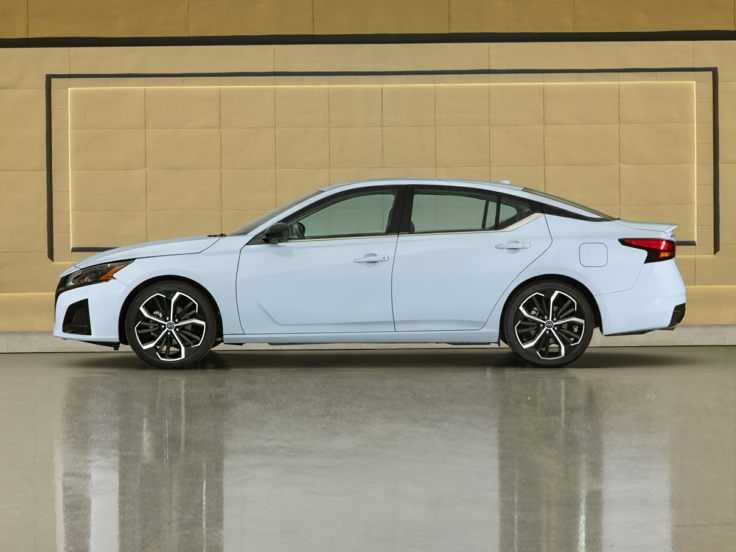
We’ll discuss the 2023 Nissan Altima safety and driving recommendations in this article. Discover Nissan Altima safety measures, handling tips, and vital insights for a safe and enjoyable drive.
2023 Nissan Altima Specs, Price, Features and Mileage (Brochure)
PRECAUTIONS WHEN STARTING AND DRIVING
WARNING
Do not leave children or adults who would normally require the assistance of others alone in your vehicle. Pets should also not be left alone. They could accidentally injure themselves or others through inadvertent operation of the vehicle. Also, on hot, sunny days, temperatures in a closed vehicle could quickly become high enough to cause severe or possibly fatal injuries to people or animals. Closely supervise children when they are around cars to prevent them from playing and becoming locked in the trunk where they could be seriously injured. Keep the car locked, with the rear seatback and trunk lid securely latched when not in use, and prevent children’s access to car keys.
EXHAUST GAS (carbon monoxide)
- Do not breathe exhaust gases; they contain colourless and odourless carbon monoxide. Carbon monoxide is dangerous. It can cause unconsciousness or death.
- If you suspect that exhaust fumes are entering the vehicle, drive with all windows fully open, and have the vehicle inspected immediately.
- Do not run the engine in closed spaces such as a garage.
- Do not park the vehicle with the engine running for any extended length of time.
- Keep the rear vent windows, liftgates, doors, and trunk lids (if so equipped) closed while driving, otherwise, exhaust gases could be drawn into the passenger compartment.
- If you must drive with one of these open, follow these precautions:
- Open all the windows.
- Set the air recirculation button to off and the fan control dials to high to circulate the air.
- If electrical wiring or other cable connections must pass to a trailer through the seal on the trunk lid or the body, follow the manufacturer’s recommendation to prevent carbon monoxide entry into the vehicle.
- The exhaust system and body should be inspected by a qualified mechanic whenever:
- The vehicle is raised for service.
- You suspect that exhaust fumes are entering the passenger compartment.
- You notice a change in the sound of the exhaust system.
- You have had an accident involving damage to the exhaust system, underbody, or rear of the vehicle.
THREE-WAY CATALYST
The three-way catalyst is an emission control device installed in the exhaust system. Exhaust gases in the three-way catalyst are burned at high temperatures to help reduce pollutants.
WARNING
The exhaust gas and the exhaust system are very hot. Keep people, animals, or flammable materials away from the exhaust system components. Do not stop or park the vehicle over flammable materials such as dry grass, waste paper, or rags. They may ignite and cause a fire.
CAUTION
- Do not use leaded gasoline. Deposits from leaded gasoline will seriously reduce the three-way catalyst’s ability to help reduce exhaust pollutants.
- Keep your engine tuned up. Malfunctions in the ignition, fuel injection, or electrical systems can overreach fuel flow into the three-way catalyst, causing it to overheat. Do not keep driving if the engine misfires, or if a noticeable loss of performance or other unusual operating conditions are detected. Has the vehicle been inspected promptly? It is recommended that you visit a NISSAN dealer for this service.
- Avoid driving with an extremely low fuel level. Running out of fuel could cause the engine to misfire, damaging the three-way catalyst.
- Do not race the engine while warming it up.
- Do not push or tow your vehicle to start the engine.
TIRE PRESSURE MONITORING SYSTEM (TPMS)
Each tyre, including the spare (if provided), should be checked monthly when cold and inflated to the inflation pressure recommended by the vehicle manufacturer on the vehicle placard or tyre inflation pressure label. (If your vehicle has tyres of a different size than the size indicated on the vehicle placard or tyre inflation pressure label, you should determine the proper tyre inflation pressure for those tyres.) As an added safety feature, your vehicle has been equipped with a Tire Pressure Monitoring System (TPMS) that illuminates a low tire pressure telltale when one or more of your tires is significantly under-inflated. Accordingly, when the low tyre pressure telltale illuminates, you should stop and check your tyres as soon as possible, and inflate them to the proper pressure. Driving on a significantly under-inflated tyre causes the tyre to overheat and can lead to tyre failure. Underinflation also reduces fuel efficiency and tyre tread life and may affect the vehicle’s handling and stopping ability. Please note that the TPMS is not a substitute for proper tyre maintenance, and it is the driver’s responsibility to maintain correct tyre pressure, even if under-inflation has not reached the level to trigger illumination of the TPMS low tyre pressure telltale. Your vehicle has also been equipped with a TPMS malfunction indicator to indicate when the system is not operating properly. The TPMS malfunction indicator is combined with the low tyre pressure telltale. When the system detects a malfunction, the telltale will flash for approximately one minute and then remain continuously illuminated. This sequence will continue upon subsequent vehicle start-ups as long as the malfunction exists. When the malfunction indicator is illuminated, the system may not be able to detect or signal low tyre pressure as intended. TPMS malfunctions may occur for a variety of reasons, including the installation of replacement or alternate tyres or wheels on the vehicle that prevents the TPMS from functioning properly. Always check the TPMS malfunction telltale after replacing one or more tyres or wheels on your vehicle to ensure that the replacement or alternate tyres and wheels allow the TPMS to continue to function properly.
Additional information:
- When using a wheel without the TPMS such as the spare tire, the TPMS does not monitor the tire pressure of the spare tire.
- The TPMS will activate only when the vehicle is driven at speeds above 16 mph (25 km/h). Also, this system may not detect a sudden drop in tyre pressure (for example, a flat tyre while driving).
- The low tyre pressure warning light does not automatically turn off when the tyre pressure is adjusted on all four tyres. After all four tyres are inflated to the recommended pressure, the vehicle must be driven at speeds above 16 mph (25 km/h) to activate the TPMS and turn off the low tyre pressure warning light. Use a tyre pressure gauge to check the tyre pressure.
- The “Tire Pressure Low – Add Air” warning appears in the vehicle information display when the low tire pressure warning light is illuminated and low tire pressure is detected. The “Tire Pressure Low – Add Air” warning turns off when the low tire pressure warning light turns off.
- The “Tire Pressure Low – Add Air” warning appears each time the ignition switch is placed in the ON position as long as the low tire pressure warning light remains illuminated.
- The “Tire Pressure Low – Add Air” warning does not appear if the low tire pressure warning light illuminates to indicate a TPMS malfunction.
- Tire pressure rises and falls depending on the heat caused by the vehicle’s operation and the outside temperature. Do not reduce the tyre pressure after driving because the tyre pressure rises after driving. Low outside temperature can lower the temperature of the air inside the tire which can cause a lower tire inflation pressure. This may cause the low tyre pressure warning light to illuminate. If the warning light illuminates, check the tyre pressure for all four tyres.
- The Tire and Loading Information label is located in the driver’s door opening.
- You can also check the tyre pressure of all tyres (except the spare) on the vehicle information display screen. The order of the tyre pressure figures displayed on the screen corresponds with the actual order of the tyre position.
WARNING
- Radio waves could adversely affect electric medical equipment. Those who use a pacemaker should contact the electric medical equipment manufacturer for possible influences before use.
- If the low tyre pressure warning light illuminates while driving, avoid sudden steering manoeuvres or abrupt braking, reduce vehicle speed, pull off the road to a safe location, and stop the vehicle as soon as possible. Driving with underinflated tyres may permanently damage the tyres and increase the likelihood of tyre failure. Serious vehicle damage could occur and may lead to an accident and could result in serious personal injury. Check the tyre pressure for all four tyres. Adjust the tire pressure to the recommended COLD tire pressure shown on the Tire and Loading Information label to turn the low tire pressure warning light off. If you have a flat tyre, replace it with a spare tyre as soon as possible.
- When using a wheel without the TPMS such as the spare tyre, when a spare tyre is mounted or a wheel is replaced, tyre pressure will not be indicated, the TPMS will not function and the low tyre pressure warning light will flash for approximately 1 minute. The light will remain on after 1 minute. It is recommended that you visit a NISSAN dealer for tyre replacement and/or system resetting.
Replacing tyres with those not originally specified by NISSAN could affect the proper operation of the TPMS.
Do not inject any tyre liquid or aerosol tyre sealant into the tyres, as this may cause a malfunction of the tyre pressure sensors.
CAUTION
Do not place metalized film or any metal parts (antenna, etc.) on the windows. This may cause poor reception of the signals from the tyre pressure sensors, and the TPMS will not function properly. Some devices and transmitters may temporarily interfere with the operation of the TPMS and cause the low tyre pressure warning light to illuminate.
Some examples are:
- Facilities or electric devices using similar radio frequencies are near the vehicle.
- If a transmitter set to similar frequencies is being used in or near the vehicle.
- If a computer (or similar equipment) or a DC/AC converter is being used in or near the vehicle.
The low tyre pressure warning light may illuminate in the following cases: - If the vehicle is equipped with a wheel and tyre without TPMS.
- If the TPMS has been replaced and the ID has not been registered.
- If the wheel is not originally specified by NISSAN.
FCC Notice:
For the USA:
This device complies with Part 15 of the FCC Rules. Operation is subject to the following two conditions: (1) This device may not cause harmful interference, and (2) this device must accept any interference received, including interference that may cause undesired operation.
NOTE:
Changes or modifications not expressly approved by the party responsible for compliance could void the user’s authority to operate the equipment.
For Canada:
This device contains license-exempt transmitter(s)/receiver(s) that comply with Innovation, Science and Economic Development Canada’s license-exempt RSS(s). Operation is subject to the following two conditions: (1) This device may not cause interference. (2) This device must accept any interference, including interference that may cause undesired operation of the device.
TPMS with Easy-Fill Tire Alert
When adding air to an under-inflated tire, the TPMS with Easy-Fill Tire Alert provides visual and audible signals outside the ve-hicle to help you inflate the tires to the recommended COLD tire pressure.
Vehicle set-up
- Park the vehicle in a safe and level place.
- Apply the parking brake and place the shift lever in the P (Park) position.
- Place the ignition switch in the ON position. Do not start the engine.
Operation
- Add air to the tyre.
- After a few seconds, the hazard indicators will start flashing.
- When the designated pressure is reached, the horn beeps once and the hazard indicators stop flashing.
- Perform the above steps for each tyre.
- If the tyre is over-inflated by more than approximately 4 psi (30 kPa), the horn beeps and the hazard indicators flash three times. To correct the pressure, push the core of the valve stem on the tyre briefly to release pressure. When the pressure reaches the designated pressure, the horn beeps once.
- If the hazard indicator does not flash within approximately 15 seconds after starting to inflate the tire, it indicates that the Easy-Fill Tire Alert is not operating.
- The TPMS will not activate the Easy-Fill Tire Alert under the following conditions:
- If there is interference from an external device or transmitter.
- The air pressure from the inflation device is not sufficient to inflate the tyre.
- There is a malfunction in the TPMS.
- There is a malfunction in the horn or hazard indicators.
- The identification code of the tyre pressure sensor is not registered to the system.
- The battery of the tyre pressure sensor is low.
- if the Easy-Fill Tire Alert does not operate due to TPMS interference, move the vehicle about 3 ft (1 m) backward or forward and try again.
- If the Easy-Fill Tire Alert is not working, use a tire pressure gauge.
AVOIDING COLLISION AND ROLLOVER
WARNING
Failure to operate this vehicle safely and prudently may result in loss of control or an accident. Be alert and drive defensively at all times. Obey all traffic regulations. Avoid excessive speed, high-speed cornering, or sudden steering maneuvers, because these driving practices could cause you to lose control of your vehicle. As with any vehicle, loss of control could result in a collision with other vehicles or objects or cause the vehicle to roll over, particularly if the loss of control causes the vehicle to slide sideways. Be attentive at all times, and avoid driving when tired. Never drive when under the influence of alcohol or drugs (including prescription or over-the-counter drugs which may cause drowsiness). Always wear your seat belt as outlined in the “Safety – Seats, seat belts and supplemental restraint system” section of this manual, and also instruct your passengers to do so. Seat belts help reduce the risk of injury in collisions and rollovers. In a rollover crash, an unbelted person is significantly more likely to die than a person wearing a seat belt.
OFF-ROAD RECOVERY
While driving, the right side or left side wheels may unintentionally leave the road surface. If this occurs, maintain control of the vehicle by following the procedure below. Please note that this procedure is only a general guide. The vehicle must be driven as appropriate based on the conditions of the vehicle, road and traffic.
- Remain calm and do not overreact.
- Do not apply the brakes.
- Maintain a firm grip on the steering wheel with both hands and try to hold a straight course.
- When appropriate, slowly release the accelerator pedal to gradually slow the vehicle.
- If there is nothing in the way, steer the vehicle to follow the road while vehicle speed is reduced. Do not attempt to drive the vehicle back onto the road surface until vehicle speed is reduced.
- When it is safe to do so, gradually turn the steering wheel until both tyres return to the road surface. When all tyres are on the road surface, steer the vehicle to stay in the appropriate driving lane.
- If you decide that it is not safe to return the vehicle to the road surface based on vehicle, road or traffic conditions, gradually slow the vehicle to a stop in a safe place off the road.
RAPID AIR PRESSURE LOSS
Rapid air pressure loss or a “blow-out” can occur if the tyre is punctured or damaged due to hitting a curb or pothole. Rapid air pressure loss can also be caused by driving on under-inflated tyres. Rapid air pressure loss can affect the handling and stability of the vehicle, especially at highway speeds. Help prevent rapid air pressure loss by maintaining the correct air pressure and visually inspecting the tyres for wear and damage. If a tyre rapidly loses air pressure or “blows out” while driving, maintain control of the vehicle by following the procedure below. Please note that this procedure is only a general guide. The vehicle must be driven as appropriate based on the conditions of the vehicle, road, and traffic.
WARNING
The following actions can increase the chance of losing control of the vehicle if there is a sudden loss of tyre air pressure. Losing control of the vehicle may cause a collision and result in personal injury.
- The vehicle generally moves or pulls in the direction of the flat tyre.
- Do not rapidly apply the brakes.
- Do not rapidly release the accelerator pedal.
- Do not rapidly turn the steering wheel.
- Remain calm and do not overreact.
- Maintain a firm grip on the steering wheel with both hands and try to hold a straight course.
- When appropriate, slowly release the accelerator pedal to gradually slow the vehicle.
- Gradually steer the vehicle to a safe location off the road and away from traffic if possible.
- Lightly apply the brake pedal to gradually stop the vehicle.
- Turn on the hazard warning flashers and contact a roadside emergency service to change the tyre.
DRINKING ALCOHOL/DRUGS AND DRIVING
WARNING
Never drive under the influence of alcohol or drugs. Alcohol in the bloodstream reduces coordination, delays reaction time, and impairs judgment. Driving after drinking alcohol increases the likelihood of being involved in an accident and injuring yourself and others. Additionally, if you are injured in an accident, alcohol can increase the severity of the injury. NISSAN is committed to safe driving. However, you must choose not to drive under the influence of alcohol. Every year thousands of people are injured or killed in alcohol-related collisions. Although the local laws vary on what is considered to be legally intoxicated, the fact is that alcohol affects all people differently and most people underestimate the effects of alcohol. Remember, drinking and driving don’t mix! That is true for drugs (over-the-counter, prescription) and illegal drugs, too. Don’t drive if your ability to operate your vehicle is impaired by alcohol, drugs, or some other physical condition.
DRIVING SAFETY PRECAUTIONS
Your NISSAN is designed for both normal and off-road use. However, avoid driving in deep water or mud as your NISSAN is mainly designed for leisure use, unlike a conventional off-road vehicle. Remember that 2-Wheel Drive (2WD) models are less capable than All-Wheel Drive (AWD) models for rough road driving and extrication when stuck in deep snow or mud, or the like.
WARNING
- Spinning the front wheels on slippery surfaces may cause the AWD warning message to display and the AWD system to automatically switch from the AWD to the 2WD mode. This could reduce the traction. Be especially careful when towing a trailer (AWD models).
- Drive carefully when off the road and avoid dangerous areas. Every person who drives or rides in this vehicle should be seated with their seat belt fastened. This will keep you and your passengers in position when driving over rough terrain.
- Do not drive across steep slopes. Instead, drive either straight up or straight down the slopes. Off-road vehicles can tip over sideways much more easily than they can forward or backwards.
- Many hills are too steep for any vehicle. If you drive up them, you may stall. If you drive down them, you may not be able to control your speed. If you drive across them, you may roll over.
- Do not shift gears while driving on downhill grades as this could cause loss of control of the vehicle.
- Stay alert when driving to the top of a hill. At the top, there could be a drop-off or other hazard that could cause an accident.
- If your engine stalls or you cannot make it to the top of a steep hill, never attempt to turn around. Your vehicle could tip or roll over. Always back straight down in R (Reverse) gear and apply brakes to control your speed.
- Heavy braking going down a hill could cause your brakes to overheat and fade, resulting in a loss of control and an accident. Apply brakes lightly and use a low gear to control your speed.
- Unsecured cargo can be thrown around when driving over rough terrain. Properly secure all cargo so it will not be thrown forward and cause injury to you or your passengers.
- Exceeding the roof rack capacity can raise the centre of gravity excessively and affect the handling and stability of the vehicle.
- Secure heavy loads in the cargo area as far forward and as low as possible. Do not equip the vehicle with tyres larger than specified in this manual. This could cause your vehicle to roll over.
- Do not grip the inside or spokes of the steering wheel when driving off-road. The steering wheel could move suddenly and injure your hands. Instead, drive with your fingers and thumbs on the outside of the rim.
- Before operating the vehicle, ensure that the driver and all passengers have their seat belts fastened.
- Always drive with the floor mats in place as the floor may become hot.
- Lower your speed when encountering strong crosswinds. With a higher centre of gravity, your NISSAN is more affected by strong side winds. Slower speeds ensure better vehicle control.
- Do not drive beyond the performance capability of the tyres, even with AWD engaged.
- For AWD-equipped vehicles, do not attempt to raise two wheels off the ground and shift the transmission to any drive or reverse position with the engine running. Doing so may result in drivetrain damage or unexpected vehicle movement which could result in serious vehicle damage or personal injury.
- Do not attempt to test an AWD-equipped vehicle on a 2-wheel dynamometer (such as the dynamometers used by some states for emissions testing) or similar equipment even if the other two wheels are raised off the ground. Make sure you inform test facility personnel that your vehicle is equipped with AWD before it is placed on a dynamometer. Using the wrong test equipment may result in drivetrain damage or unexpected vehicle movement which could result in serious vehicle damage or personal injury.
- When a wheel is off the ground due to an uneven surface, do not spin the wheel excessively.
- Accelerating quickly, sharp steering manoeuvres or sudden braking may cause a loss of control.
- If at all possible, avoid sharp turning manoeuvres, particularly at high speeds. Your NISSAN vehicle has a higher centre of gravity than a passenger car. The vehicle is not designed for cornering at the same speeds as passenger cars.
- Failure to operate this vehicle correctly could result in loss of control and/or a rollover accident.
- Always use tyres of the same type, size, brand, construction (bias, bias-belted, or radial), and tread pattern on all four wheels. Install tyre chains on the front wheels when driving on slippery roads and drive carefully.
- Be sure to check the brakes immediately after driving in mud or water.
- Avoid parking your vehicle on steep hills. If you get out of the vehicle and it rolls forward, backwards or sideways, you could be injured.
- Whenever you drive off-road through sand, mud or water as deep as the wheel hub, more frequent maintenance may be required.
PUSH-BUTTON IGNITION SWITCH
WARNING
Do not operate the push-button ignition switch while driving the vehicle except in an emergency. (The engine will stop when the ignition switch is pushed three consecutive times in quick succession or the ignition switch is pushed and held for more than 2 seconds.) If the engine stops while the vehicle is being driven, this could lead to a crash and serious injury.

When the ignition switch is pushed without depressing the brake pedal, the ignition switch will illuminate.
Push the ignition switch centre:-
- Once to change to ON.
- Two times to change to OFF.
The ignition switch will automatically return to the LOCK position when any door is either opened or closed with the switch in the OFF position.
The ignition lock is designed so that the ignition switch cannot be placed in the OFF position until the shift lever is moved to the P (Park) position.
When the ignition switch cannot be placed in the OFF position, proceed as follows:
- Move the shift lever to the P (Park) position.
- Push the ignition switch. The ignition switch position will change to the ON position.
- Push the ignition switch again to the OFF position.
The shift lever can be moved from the P (Park) position if the ignition switch is in the ON position and the brake pedal is depressed. If the battery of the vehicle is discharged, the ignition switch cannot be moved from the LOCK position. Some indicators and warnings for operation are displayed on the vehicle information display.

OPERATING RANGE
The Intelligent Key functions can only be used when the Intelligent Key is within the specified operating range. When the Intelligent Key battery is almost discharged or strong radio waves are present near the operating location, the Intelligent Key system’s operating range becomes narrower and may not function properly. If the Intelligent Key is within the operating range, it is possible for anyone, even someone who does not carry the Intelligent Key, to push the ignition switch to start the engine. The operating range of the engine start function is inside the vehicle 1O.
- The luggage area is not included in the operating range, but the Intelligent Key may function.
- If the Intelligent Key is placed on the instrument panel or inside the glove box, storage bin or door pocket, the Intelligent Key may not function.
- If the Intelligent Key is placed near the door or window outside the vehicle, the Intelligent Key may function.
PUSH-BUTTON IGNITION SWITCH POSITIONS
LOCK (Normal parking position)
The ignition switch can only be locked in this position. The ignition switch will be unlocked when it is pushed to the ON position while carrying the Intelligent Key. The ignition switch will lock when any door is opened or closed with the ignition switched off.
ON (Normal operating position)
This position turns on the ignition system and electrical accessories. ON has a battery saver feature that will place the ignition switch in the OFF position, if the vehicle is not running, after some time under the following conditions:
- All doors are closed.
- The shift lever is in P (Park).
The battery saver feature will be cancelled if any of the following occur: - Any door is opened.
- The shift lever is moved out of the P (Park) position.
- The ignition switch changes position.
CAUTION
Do not leave the vehicle with the ignition switch in the ON position when the engine is not running for an extended period. This can discharge the battery.
OFF
The ignition switch is in the OFF position when the engine is turned off using the ignition switch. No lights will illuminate on the ignition switch.
AUTO ACC:
With the vehicle in the P (Park) position, the Intelligent Key with you and the ignition switch placed from the ON position to the OFF position, the radio can still be used for some time, or until the driver’s door is opened. After some time, functions such as radio, navigation, and Bluetooth® Hands-Free Phone System may be restarted by pressing the POWER button/VOLUME control knob or the key fob unlock button. For additional information, refer to the separate NissanConnect® Owner’s Manual.
EMERGENCY ENGINE SHUT OFF
To shut off the engine in an emergency while driving, perform the following procedure:
Rapidly push the ignition switch three consecutive times in less than 1.5 seconds, or Push and hold the ignition switch for more than 2 seconds.

NISSAN INTELLIGENT KEY® BATTERY DISCHARGE
If the battery of the NISSAN Intelligent Key® is discharged or environmental conditions interfere with the Intelligent Key operation, start the engine according to the following procedure:
- Place the shift lever in the P (Park) position.
- Firmly apply the foot brake.
- Touch the ignition switch with the Intelligent Key as illustrated. (A chime will sound.)
After step 3 is performed, when the ignition switch is pushed without depressing the brake pedal, the ignition switch position will change to the ON position. - Push the ignition switch while depressing the brake pedal within 10 seconds after the chime sounds. The engine will start.
NOTE:
- When the ignition switch is pushed to the ON position or the engine is started by the above procedure, the Intelligent Key battery discharge indicator appears in the vehicle information display even when the
- Intelligent Key is inside the vehicle. This is not a malfunction. To turn off the Intelligent Key battery discharge indicator, touch the ignition switch with the Intelligent Key again.
- If the Intelligent Key battery discharge indicator appears, replace the battery as soon as possible.
NISSAN VEHICLE IMMOBILIZER SYSTEM
The NISSAN Vehicle Immobilizer System will not allow the engine to start without the use of the registered key. If the engine fails to start using a registered key (for example, when interference is caused by another registered key, an automated toll road device or an automatic payment device on the key ring), restart the engine using the following procedure:
- Leave the ignition switch in the ON position for approximately 5 seconds.
- Place the ignition switch in the OFF or LOCK position, and wait approximately 10 seconds.
- Repeat steps 1 and 2.
- Restart the engine while holding the device (which may have caused the interference) separate from the registered key.
If the no-start condition re-occurs, NISSAN recommends placing the registered key on a separate key ring to avoid interference from other devices.
BEFORE STARTING THE ENGINE
- Make sure the area around the vehicle is clear.
- Check fluid levels such as engine oil, coolant, brake fluid, and windshield-washer fluid as frequently as possible, or at least whenever you refuel.
- Check that all windows and lights are clean.
- Visually inspect tyres for their appearance and condition. Also, check the tyres for proper inflation.
- Lock all doors.
- Position the seat and adjust the headrests/head restraints.
- Adjust inside and outside mirrors.
- Fasten seat belts and ask all passengers to do likewise.
- Check the operation of warning lights when the ignition switch is pushed to the ON position.
STARTING THE ENGINE
- Apply the parking brake.
- Move the shift lever to P (Park) or N (Neutral). P (Park) is recommended.
The starter is designed not to operate if the shift lever is in any of the driving positions. - Push the ignition switch to the ON position. Depress the brake pedal and push the ignition switch to start the engine. To start the engine immediately, push and release the ignition switch while depressing the brake pedal with the ignition switch in any position.
- If the engine is very hard to start in extremely cold weather or when re-starting, depress the accelerator pedal a little (approximately 1/3 to the floor) and while holding, crank the engine. Release the accelerator pedal when the engine starts.
- If the engine is very hard to start because it is flooded, depress the accelerator pedal to the floor and hold it. Push the ignition switch to the ON position to start cranking the engine. After 5 or 6 seconds, stop cranking by pushing the ignition switch to the LOCK position. After cranking the engine, release the accelerator pedal. Crank the engine with your foot off the accelerator pedal by depressing the brake pedal and pushing the ignition switch to start the engine. If the engine starts but fails to run, repeat the above procedure.
CAUTION
Do not operate the starter for more than 15 seconds at a time. If the engine does not start, push the ignition switch to the OFF position and wait 10 seconds before cranking again, otherwise, the starter could be damaged.
- Warm-up:
Allow the engine to idle for at least 30 seconds after starting. Do not race the engine while warming it up. Drive at a moderate speed for a short distance first, especially in cold weather. In cold weather, keep the engine running for a minimum of 2 to 3 minutes before shutting it off. Starting and stopping the engine over a short period may make the vehicle more difficult to start. - To stop the engine, move the shift lever to the P (Park) position and push the ignition switch to the OFF position.
NOTE:
Care should be taken to avoid situations that can lead to potential battery discharge and potential no-start conditions such as:
- Installation or extended use of electronic accessories that consume battery power when the engine is not running (phone chargers, GPS, DVD players, etc.).
- The vehicle is not driven regularly and/or only driven short distances. In these cases, the battery may need to be charged to maintain battery health.
REMOTE ENGINE START
Vehicles started with the Remote Engine Start require the ignition switch to be placed in the ON position before the shift lever can be moved from the P (Park) position. To place the ignition switch in the ON position, follow these steps:
- Make sure that the Intelligent Key is on you.
- Apply the brake.
- Push the ignition switch once to the ON position.
DRIVING THE VEHICLE CONTINUOUSLY VARIABLE TRANSMISSION (CVT)
- Do not depress the accelerator pedal while shifting from P (Park) or N (Neutral) to R (Reverse), D (Drive), L (Low) or manual shift mode (if so equipped). Always depress the brake pedal until shifting is completed. Failure to do so could cause you to lose control and have an accident.
- Cold engine idle speed is high, so use caution when shifting into a forward or reverse gear before the engine has warmed up.
- Do not downshift abruptly on slippery roads. This may cause a loss of control.
- Never shift to either the P (Park) or R (Reverse) position while the vehicle is moving forward and the P (Park) or D (Drive) position while the vehicle is reversing. This could cause an accident or damage the transmission.
CAUTION
Except in an emergency, do not shift to the N (Neutral) position while driving. Coasting with the transmission in the N (Neutral) position may cause serious damage to the transmission. To avoid possible damage to your vehicle, when stopping the vehicle on an uphill grade, do not hold the vehicle by depressing the accelerator pedal. The foot brake should be used for this purpose. The CVT in your vehicle is electronically controlled to produce maximum power and smooth operation. Follow these procedures for maximum vehicle performance and driving enjoyment.
NOTE:
Engine power may be automatically reduced to protect the CVT if the engine speed increases quickly when driving on slippery roads or while being tested on some dynamometers.

Starting the vehicle
- After starting the engine, fully depress the foot brake pedal before moving the shift lever out of the P (Park) position. The Continuously Variable Transmission is designed so the foot brake pedal MUST be depressed before shifting from P (Park) to any drive position while the ignition switch is in the ON position. The shift lever cannot be moved out of P (Park) and into any of the other gear positions if the ignition switch is placed in the LOCK position.
- A screen is displayed for a period that indicates the status of the driving aid functions (if so equipped).
- AEB with Pedestrian Detection, LDW, and BSW are enabled when the specified driving aid is shaded.
- I-LI is enabled when the driving aid is solid.
- Use the 1O button to navigate the settings screen.
- Keep the foot brake pedal depressed and move the shift lever to a driving position.
- Release the foot brake, then gradually start the vehicle in motion.
- Stop the vehicle completely before moving the shift lever to the P (Park) position.
WARNING
- Do not depress the accelerator pedal while shifting from P (Park) or N (Neural) to R (Reverse), D (Drive), L (Low), or manual shift mode (if so equipped). Always depress the brake pedal until shifting is completed. Failure to do so could cause you to lose control and have an accident.
- Cold engine idle speed is high, so use caution when shifting into a forward or reverse gear before the engine has warmed up.
- Do not downshift abruptly on slippery roads. This may cause a loss of control.
- Never shift to either the P (Park) or R (Reverse) position while the vehicle is moving forward and the P (Park) or D (Drive) position while the vehicle is reversing. This could cause an accident or damage the transmission.
CAUTION
Except in an emergency, do not shift to the N (Neutral) position while driving. Coasting with the transmission in the N (Neutral) position may cause serious damage to the transmission. To avoid possible damage to your vehicle, when stopping the vehicle on an uphill grade, do not hold the vehicle by depressing the accelerator pedal. The foot brake should be used for this purpose.

Shifting To move the shift lever:
- Press the button OA while depressing the brake pedal
- Press the button OA to shift
- Shift without pressing the button
After starting the engine, fully depress the brake pedal and move the shift lever from P (Park) to any of the desired shift positions.
WARNING
Apply the parking brake if the shift lever is in any position while the engine is not running. Failure to do so could cause the vehicle to move unexpectedly or roll away and result in serious personal injury or property damage.
P (Park)
To prevent transmission damage, use the P (Park) or R (Reverse) position only when the vehicle is completely stopped. Use the P (Park) shift lever position when the vehicle is parked or when starting the engine. Make sure the vehicle is completely stopped. The brake pedal should be depressed to move the shift lever from N (Neutral) or any drive position to P (Park). Apply the parking brake. When parking on a hill, apply the parking brake first, then move the shift lever into the P (Park) position.
R (Reverse)
To prevent transmission damage, use the P (Park) or R (Reverse) position only when the vehicle is completely stopped. Use the R (Reverse) position to back up. Make sure the vehicle is completely stopped before selecting the R (Reverse) position. The brake pedal must be depressed to move the shift lever from P (Park), N (Neutral), or any drive position to R (Reverse).
N (Neutral)
Neither forward nor reverse gear is engaged. The engine can be started in this position. You may shift to N (Neutral) and restart a stalled engine while the vehicle is moving.
D (Drive)
Use this position for all normal forward driving.
L(Low)
Use this position for engine braking on steep downhill gradients/climbing steep slopes and whenever approaching sharp bends. Do not use the L (Low) position in any other circumstances.

Manual shift mode (if so equipped)
When the shift lever is in the D (Drive) position and the drive sport mode switch is pushed, the transmission is ready for the manual shift mode. Shift ranges can be selected manually by pulling the right-side or left-side paddle shifter. When shifting up, pull the right-side paddle shifter (+) OB. The transmission shifts to the higher range. When shifting down, pull the left side paddle shifter (−) OA. The transmission shifts to the lower range. When cancelling the manual shift mode, push the drive sport mode switch. The transmission returns to the normal driving mode. When you pull the paddle shifter while in the D (Drive) position with the drive sport mode switch pushed, the transmission will shift to the upper or lower range temporarily. The transmission will automatically return to the drive sport mode after a short period. If you want to return to the drive sport mode manually, pull and hold the paddle shifter for about 1.5 seconds. In the manual shift mode, the shift range is displayed on the position indicator in the meter. Shift ranges up or down one by one as follows: 1⇔ 2 ⇔ 3 ⇔ 4 ⇔ 5 ⇔ 6 ⇔ 7 ⇔ 8 M8 (8th) and M7 (7th) Use this position for all normal forward driving at highway speeds. M6 (6th) and M5 (5th) Use this position when driving up long slopes or for engine braking when driving down long slopes.
M4 (4th), M3 (3rd) and M2 (2nd)
Use for hill climbing or engine braking on downhill grades.
M1 (1st)
Use this position when climbing steep hills slowly or driving slowly through deep snow, sand or mud, or for maximum engine braking on steep downhill grades. Remember not to drive at high speeds for extended periods in lower than the 8th range. This reduces fuel economy.
When shifting up
Use the + (up) side paddle shifter. (Shifts to higher range.)
When shifting down
Use the − (down) side paddle shifter. (Shifts to lower range.)
When cancelling the manual shift mode
To cancel manual shift mode, push the drive sport mode switch on the shift lever or press and hold either paddle shifter.
- In the manual shift mode, the transmission may not shift to the selected gear. This helps maintain driving performance and reduces the chance of vehicle damage or loss of control.
- In the manual shift mode, the transmission may shift up automatically to a higher range than selected if the engine speed is too high. When the vehicle speed decreases, the transmission automatically shifts down and shifts to 1st gear before the vehicle comes to a stop.
- Continuously Variable Transmission (CVT) operation is limited to automatic drive mode when CVT fluid temperature is extremely low even if manual shift mode is selected. This is not a malfunction. When CVT fluid warms up, manual mode can be selected.
- When the CVT fluid temperature is high, the shift range may upshift at a lower rpm than usual. This is not a malfunction.

Shift lock release
If the battery charge is low or discharged, the shift lever may not be moved from the P (Park) position even with the brake pedal depressed and the shift lever button pressed. It will be necessary to jump-start or have your battery charged. For additional information, see “Jump starting” (P. 6-11). Contact a NISSAN dealer or a professional towing service.
To move the shift lever, complete the following procedure:
- Push the ignition switch to the LOCK position.
- Apply the parking brake.
- Using a protective cloth on the tip of a 3 mm screwdriver, remove the shift lock release cover.
- If available, a plastic trim tool can also be used.
- Insert the small screwdriver in the shift lock release slot and push down.
- Move the shift lever to the N (Neutral) position while holding down the shift lock release.
If the shift lever cannot be moved out of P (Park), have the transmission checked as soon as possible. It is recommended that you visit a NISSAN dealer for this service.
WARNING
If the shift lever cannot be moved from the P (Park) position while the engine is running and the brake pedal is depressed, the stop lights may not work. Malfunctioning stop lights could cause an accident injuring yourself and others.

Drive sport mode
Drive sport mode switch When the drive sport mode switch is pushed with the shift lever in the D (Drive) position, the drive sport mode indicator in the instrument panel appears. Use the drive sport mode when you need improved engine braking. To turn off the drive sport mode, push the drive sport mode switch again. The drive sport mode indicator will turn off. Each time the engine is started, or when the shift lever is shifted to any position other than D (Drive), the drive sport mode will automatically turn off.
Accelerator downshift — in D (Drive) position —
For passing or hill climbing, depress the accelerator pedal to the floor. This shifts the transmission down into a lower gear, depending on the vehicle’s speed.
High fluid temperature protection mode
This transmission has a high fluid temperature protection mode. If the fluid temperature becomes too high (for example, when climbing steep grades in high temperatures with heavy loads, such as when towing a trailer), engine power and, under some conditions, vehicle speed will be decreased automatically to reduce the chance of transmission damage. Vehicle speed can be controlled with the accelerator pedal, but the engine and vehicle speed may be limited.
Fail-safe
If the vehicle is driven under extreme conditions, such as excessive wheel spinning and subsequent hard braking, the fail-safe system may be activated. The Malfunction Indicator Light (MIL) may come on to indicate the fail-safe mode is activated. This will occur even if all electrical circuits are functioning properly. In this case, place the ignition switch in the OFF position and wait for 10 seconds. Then push the switch back to the ON position. The vehicle should return to its normal operating condition. If it does not return to its normal operating condition, have the transmission checked. It is recommended that you visit a NISSAN dealer for this service.
WARNING
When the high fluid temperature protection mode or fail-safe operation occurs, vehicle speed may be gradually reduced. The reduced speed may be lower than other traffic, which could increase the chance of a collision. Be especially careful when driving. If necessary, pull to the side of the road at a safe place and allow the transmission to return to normal operation, or have it repaired.
FAQ
Always obey traffic laws, drive at safe speeds, and avoid distractions while operating the vehicle.
The 2023 Altima may come with a spare tyre or a tyre inflation kit, depending on the trim level and options.
If the check engine light illuminates, it’s advisable to have the vehicle inspected by a qualified technician to diagnose and address any potential issues.
When parking, ensure the vehicle is in park, engage the parking brake, and turn off the engine. Be mindful of parking regulations and avoid blocking fire hydrants or emergency exits.
Useful Links
View Full User Guide: Nissan ALTIMA 2023 User Guide
2023 Nissan ALTIMA Parking Brake and Traffic Sign User Guide
2023 Nissan Altima Specs, Price, Features and Mileage (Brochure)