
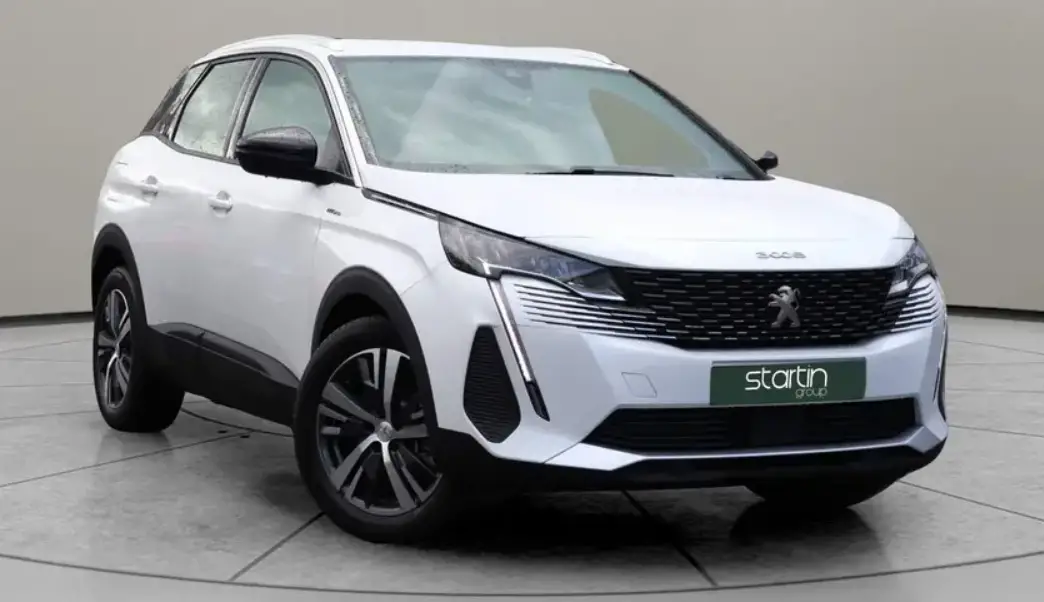

2023 Peugeot 3008 Fuses and Fuse Box
The 2023 Peugeot 3008 Fuses and Fuse Box play a vital role in ensuring that your vehicle’s electrical systems operate effectively and safely. Fuses are tiny but essential components that protect the electrical circuits in your automobile from overloading, thereby preventing potential damage and electrical fires. The fuse box is the central location where these fuses are housed, making it a vital component of your vehicle’s electrical system.
In this introduction, we’ll examine the 2023 Peugeot 3008 Fuses and Fuse Box, highlighting their significance, organisation, and role in maintaining the functionality of your vehicle. Every Peugeot 3008 owner must understand how fuses operate and where they are located in the fuse box to ensure the continued operation of their vehicle’s electrical systems.
Fuses
Changing a fuse
All work must be carried out only by a PEUGEOT dealer or a qualified workshop
The replacement of a fuse by a third party could cause a serious malfunction of the vehicle.
Installing electrical accessories
The vehicle’s electrical system is designed to operate with standard or optional equipment.
Before fitting other electrical equipment or accessories to your vehicle, contact a PEUGEOT dealer or a qualified workshop.
PEUGEOT accepts no responsibility for the cost incurred in repairing the vehicle or for rectifying malfunctions resulting from the installation of accessories not supplied or not recommended by PEUGEOT and not installed by its recommendations, in particular when the combined power consumption of all of the additional equipment connected exceeds 10 milliamperes.
12 V battery / Accessory battery
Procedure for starting the engine using another battery or for charging a discharged battery.
Lead-acid starter batteries
These batteries contain harmful substances (sulphuric acid and lead).
They must be disposed of by regulations and must never under any circumstances be discarded with household waste.
Dispose of used batteries at a designated collection point.
Protect your eyes and face before handling the battery.
All operations on the battery must be carried out in a well ventilated area and away from naked flames and sources of sparks, to avoid any risk of explosion or fire.
Wash your hands afterwards.
Electronic control units/LED technology headlamps
Never connect the negative jump lead to the metal part of the electronic control units or at the back of the headlamps.
Risk of destroying the electronic control units and/or headlamps!
Connect to the remote earth point provided for this purpose.
Frozen battery
Never try to charge a frozen battery – risk of explosion!
If the battery has frozen, have it checked by a PEUGEOT dealer or by a qualified workshop, who will verify that the internal components have not been damaged and that the case has not cracked, which could lead to a risk of leakage of toxic and corrosive acid.
Automatic gearbox
Never try to start the engine by pushing the vehicle.
Symbols
No sparks or naked flames, no smoking.
Always protect your eyes. Explosive gases can cause blindness and injury. Keep the vehicle’s battery out of the reach of children.
The vehicle’s battery contains sulphuric acid which can make you go blind or cause severe burns.
For more information, refer to the handbook.
Explosive gases can be present close to the battery.
With petrol/Diesel engines
Procedure for starting the engine using another battery or for charging a discharged battery.
Accessing the Battery
The battery is located under the bonnet.

For access to the (+) terminal:
- Release the bonnet by pulling the internal release lever, then the external safety catch.
- Raise the bonnet.
- (+) Positive terminal.
This terminal has a quick-release clamp.
(-) Negative terminal.
As the battery’s negative terminal is not accessible, a remote earth point is located facing the battery.
Starting using another battery
- If the vehicle’s battery is flat, the engine can be started using a backup battery (either external or from another vehicle) and jump leads or using a battery booster.
- Never start the engine by connecting a battery charger.
- Never use a 24 V or higher battery booster.
- Check beforehand that the backup battery has a nominal voltage of 12 V and a capacity at least equal to that of the discharged battery.
- The two vehicles must not be in contact with each other.
- Switch off all electricity-consuming equipment on both vehicles (audio system, wipers, lighting, etc.).
- Make sure that the jump leads are well away from the engine’s moving parts (fan, belt, etc.).
- Do not disconnect the (+) terminal while the engine is running.

- Lift the plastic cover on the (+) terminal, if the vehicle has one.
- Connect the red cable to the (+) terminal of flat battery A (at the metal elbow), then to the (+) terminal of the backup battery B or of the booster.
Connect one end of the green or black cable to the (-) terminal of the backup battery B or of the booster (or to an earth point on the assisting vehicle).
Connect the other end of the green or black cable to the earth point C.
Start the engine on the assisting vehicle and leave it running for a few minutes.
Operate the starter on the broken down vehicle and let the engine run.
If the engine does not start immediately, switch off the ignition and wait a few moments before trying again.
Wait for it to return to idle.
Disconnect the jump leads in reverse order.
Refit the plastic cover to the (+) terminal, if the vehicle has one. - Allow the engine to run for at least
30 minutes, with the vehicle stationary, so that the battery reaches an adequate state of charge. - Driving immediately without having reached a sufficient level of charge may affect some of the vehicle’s functions.
- Automatic gearbox
Never try to start the engine by pushing the vehicle.
Charging the battery using a battery charger
For optimum service life of the battery, it is essential to maintain an adequate state of charge.
In some circumstances, it may be necessary to charge the battery:
- When using the vehicle mainly for short journeys.
- If the vehicle is to be taken off the road for several weeks.
Consult a PEUGEOT dealer or a qualified workshop. - To charge the vehicle’s battery yourself, use only a charger compatible with lead-acid batteries with a nominal voltage of 12 V.
Follow the instructions provided by the manufacturer of the charger.
Never reverse polarities.
It is not necessary to disconnect the battery.
- Switch the ignition off.
- Switch off all electrical consumers (audio system, lighting, wipers, etc.).

- Switch off charger B before connecting
the cables to the battery, so as to avoid any dangerous sparks. - Ensure that the charger cables are in good condition.
- Lift the plastic cover on the (+) terminal, if the vehicle has one.
- Connect the cables of charger B as follows:
- The positive (+) red cable to the (+) terminal of battery A,
- The negative (-) black cable to earth point C on the vehicle.
- At the end of the charging operation, switch off charger B before disconnecting the cables from battery A.
- Disconnecting/reconnecting the accessory batteries
Procedure for disconnecting/reconnecting the accessory batteries in the event of long-term immobilisation of the vehicle.
Before disconnecting the accessory batteries:
Open the driver’s door and boot.
Close all other doors.
Switch off all electrical consumers (audio system, wipers, lamps, etc.).
Switch off the ignition and wait for the READY indicator lamp to go out.
Observe a waiting time of 4 minutes. Never reverse the order of the steps for disconnecting and reconnecting the accessory batteries – risk of irreversible damage!

- Disconnection
Rear battery:
Disconnect the (-) terminal using the black quick-release connector.
Front battery:
- Connect the (+) terminal by connecting the red quick-release clamp:
- Raise lever A fully.
- Refit open clamp B on the (+) terminal.
- Push clamp B fully down.
- Lower lever A to lock clamp B.
Rear battery:
- Connect the (-) terminal using the black quick-release connector.
The following reconnection
After reconnecting the battery, turn on the ignition and wait 1 minute before starting the engine, to enable the electronic systems to initialise.
If minor problems nevertheless persist following this operation, contact a PEUGEOT dealer or a qualified workshop.
Referring to the relevant section, reinitialise certain equipment:
- Remote control key or electronic key
(depending on version). - Sunroof.
- Electric windows.
- Date and time.
- Preset radio stations.
The Stop & Start system may not be operational during the trip following the first engine start.
In this case, the system will only be available again after a continuous period with the vehicle immobilised, the duration of which depends on the exterior temperature and the state of charge of the battery (up to about 8 hours).
-
Towing the Vehicle
General recommendations
Observe the legislation in force in the country where you are driving.
Ensure that the weight of the towing vehicle is higher than that of the towed vehicle.
The driver must remain at the wheel of the towed vehicle and must have a valid driving licence.
When towing a vehicle with all four wheels on the ground, always use an approved towing arm; rope and straps are prohibited.
The towing vehicle must move off gently.
When the vehicle is towed with its engine off, there is no longer braking and steering assistance.
FAQs
The purpose of fuses in the 2023 Peugeot 3008 is to protect the vehicle’s electrical circuits from overloads and to prevent damage to the wiring and electrical components.
Typically, the fuse box is located in the engine compartment or the vehicle’s cabin. Consult the owner’s manual for the precise location.
A blown fuse can be identified by a visible split in the metal strip or a discoloured appearance. Some fuses feature an LED indicator that illuminates when the fuse is broken.
Yes, you can replace a blown fuse yourself. The owner’s manual provides information on the locations and amperage ratings of the fuses.
Typically, all you need to replace a fuse is a pair of needle-nose pliers or a fuse extractor, along with replacement fuses of the appropriate amperage.
Typically, the correct amperage rating is displayed on the fuse or in the owner’s manual. Use only fuses with the specified amperage rating.
Using a fuse with the incorrect amperage rating can cause electrical system damage or accidents. Always use the fuse with the correct amperage.
Some models include spare fuses in the fuse box, but it is advisable to keep spare fuses of varying amperages in your vehicle.
Circuit breakers may not offer the same level of protection as fuses, so it is not recommended to replace fuses with them.
Examine fuses frequently or when an electrical component fails. Change burnt fuses as necessary.
The fuse box can be accessed without disconnecting the battery, but it is a wise safety practise to disconnect the battery before working on electrical components.
The fuse box cover safeguards the fuses against grime, moisture, and accidental contact. Always ensure that it is securely fastened.
If you are unable to locate a ruptured fuse or the problem persists, you should consult a professional mechanic or a Peugeot service centre.
Yes, you can install additional accessories using the fuse box, but it’s important to use the correct fuses and adhere to proper installation procedures to avoid electrical problems.
Always use protective eyewear and mittens when handling fuses. Before working on the fuse box, ensure the vehicle is turned off and the battery is disconnected to reduce the risk of electrical shock and accidents.
Useful Link
View Full PDF : 2023 Peugeot 3008 User Manual | Auto User Guide
2023 Peugeot 3008 Seat Belt Guide