
2016 Yamaha FZ-07 Owner’s Manual
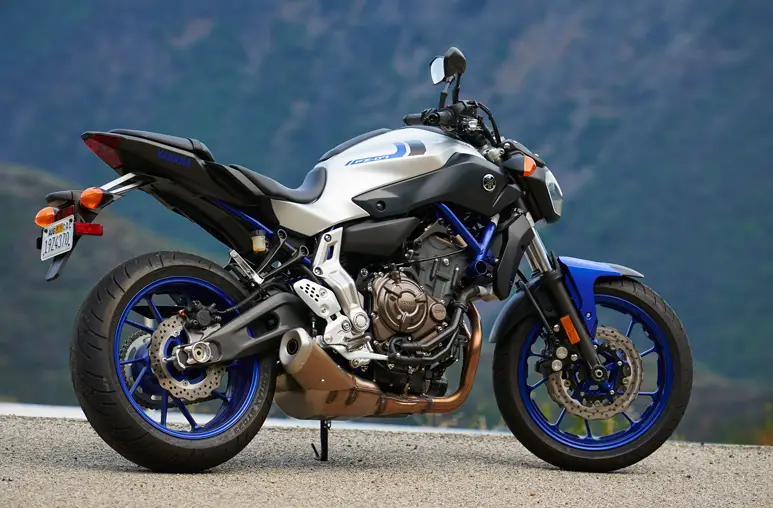
The 2016 Yamaha FZ-07 was a dynamic and flexible middleweight naked motorbike that was both fast and useful for everyday use. It had a powerful 689cc twin-cylinder engine that gave it 75 horsepower and a good amount of torque, which made it fun to ride for both new and experienced motorcycle riders. The FZ-07 was great for traveling in the city and going on fun weekend rides because it was easy to handle, light, and had a comfortable upright riding position. Its simple, stylish design and high-tech features like fuel injection and anti-lock braking system (ABS) made it a top choice in the naked bike category. It was a top choice because it was fast, affordable, and versatile.
Operation and important riding points
TIP
This model is equipped with:
- a lean angle sensor to stop the engine in case of a turnover. In this case, the display will indicate error code 30, but this is not a malfunction. Turn the key to “OFF” and then to “ON” to clear the error code. Failing to do so will prevent the engine from starting even though the engine will crank when pushing the start switch.
- an engine auto-stop system. The engine stops automatically if left idling for 20 minutes. If the engine stops, simply push the start switch to restart the engine.
Starting the engine
In order for the ignition circuit cut-off system to enable starting, one of the following conditions must be met:
- The transmission is in the neutral position.
- The transmission is in gear with the clutch lever pulled and the sidestand up.
- Turn the key to “ON” and make sure that the start/engine stop switch is set.
- The following warning lights should come on for a few seconds, then go off.
- Coolant temperature warning light
- Engine trouble warning light
- Oil pressure warning light (This warning light comes on again after going off briefly, and then remains on until the engine is started.)
NOTICE- If a warning light does not come on initially when the key is turned to “ON”, or if a warning light (except the oil pressure warning light) remains on, see for the corresponding warning light circuit check. After going off once, the oil pressure warning light will come back on until the engine is started. If the warning light does not come on, or if the warning light does not go off after starting the engine, see for the engine oil pressure warning light circuit check.
- Shift the transmission into the neutral position. The neutral indi-cator light should come on. If not, ask a Yamaha dealer to check the electrical circuit.
- Start the engine by sliding the switch.
If the engine fails to start, release the start/engine stop switch, wait a few seconds, and then try again. Each starting attempt should be as short as possible to preserve the battery. Do not crank the engine for more than 10 seconds on any one attempt.
NOTICE: For maximum engine life, never accelerate hard when the engine is cold.
Shifting
Shifting gears lets you control the amount of engine power available for starting off, accelerating, climbing hills, etc. The gear positions are shown in the illustration.
TIP: To shift the transmission into the neutral position, press the shift pedal down repeatedly until it reaches the end of its travel, and then slightly raise it.
NOTICE
- Even with the transmission in the neutral position, do not coast for long periods of time with the engine off, and do not tow the motorcycle for long distances. The transmission is properly lubricated only when the engine is running. Inadequate lubrication may damage the transmission.
- Always use the clutch while changing gears to avoid damaging the engine, transmission, and drive train, which are not designed to withstand the shock of forced shifting.
To start out and accelerate
- Pull the clutch lever to disengage the clutch.
- Shift the transmission into first gear. The neutral indicator light should go out.
- Open the throttle gradually, and at the same time, release the clutch lever slowly.
- At the recommended shift points shown in the following table, close the throttle, and at the same time, quickly pull the clutch lever in.
- Shift the transmission into second gear. (Make sure not to shift the transmission into the neutral position.)
- Open the throttle partway and gradually release the clutch lever.
- Follow the same procedure when shifting to the next higher gear.
TIP: When shifting gears in normal operating conditions, use the recommended shift points.
To decelerate
- Release the throttle and apply both the front and the rear brakes smoothly to slow the motorcycle.
- At the recommended shift points shown in the following table, shift to a lower gear.
- When the motorcycle reaches 20 km/h (12 mi/h), the engine is about to stall or run roughly, pull the 6- 3 clutch lever in, use the brakes to slow the motorcycle, and continue to downshift as necessary.
- Once the motorcycle has stopped, the transmission can be shifted into the neutral position. The neutral indicator light should come on and then the clutch lever can be released.
WARNING
- Improper braking can cause loss of control or traction. Always use both brakes and apply them smoothly.
- Make sure that the motorcycle and the engine have sufficiently slowed before shifting to a lower gear. Engaging a lower gear when the vehicle or engine speed is too high could make the rear wheel lose traction or the engine over-rev. This could cause loss of control, an accident, and injury. It could also cause an engine or drive train damage.
Engine break-in
There is never a more important period in the life of your engine than the period between 0 and 1600 km (1000 mi). For this reason, you should read the following material carefully. Since the engine is brand new, do not put an excessive load on it for the first 1600 km (1000 mi). The various parts in the engine wear and polish themselves to the correct operating clearances. During this period, prolonged full-throt-tle operation or any condition that might result in engine overheating must be avoided.
0–1000 km (0–600 mi)
Avoid prolonged operations above 5000 r/min.
NOTICE: After 1000 km (600 mi) of operation, the engine oil must be changed and the oil filter cartridge or element replaced.
1000–1600 km (600–1000 mi)
Avoid prolonged operation above 6000 r/min.
1600 km (1000 mi) and beyond
The vehicle can now be operated normally.
NOTICE
- Keep the engine speed out of the tachometer red zone.
- If any engine trouble should occur during the engine break-in period, immediately have a Yamaha dealer check the vehicle.
Parking
When parking, stop the engine and then remove the key from the main switch.
WARNING
- Since the engine and exhaust system can become very hot, park in a place where pedestrians or children are not likely to touch them and be burned.
- Do not park on a slope or on soft ground, otherwise, the vehicle may overturn, increasing the risk of a fuel leak and fire.
- Do not park near grass or other flammable materials which might catch fire.
Periodic maintenance and adjustment
Periodic inspection, adjustment, and lubrication will keep your vehicle in the safest and most efficient condition possible. Safety is an obligation of the vehicle owner/operator. The most important points of vehicle inspection, adjustment, and lubrication are explained on the following pages. The intervals given in the periodic maintenance charts should be simply considered as a general guide under normal riding conditions. However, depending on the weather, terrain, geographical location, and individual use, the maintenance intervals may need to be shortened.
WARNING: Failure to properly maintain the vehicle or performing maintenance activities incorrectly may increase your risk of injury or death during service or while using the vehicle. If you are not familiar with vehicle service, have a Yamaha dealer perform service. Turn off the engine when performing maintenance unless otherwise specified.
- A running engine has moving parts that can catch on body parts or clothing and electrical parts that can cause shocks or fires.
- Running the engine while ser-vicing can lead to eye injury, burns, fire, or carbon monoxide poisoning – possibly leading to death.
- Brake discs, calipers, drums, and linings can become very hot during use. To avoid possible burns, let brake components cool before touching them.
Emission controls not only function to ensure cleaner air but are also vital to proper engine operation and maximum performance. In the following periodic maintenance charts, the services related to emissions control are grouped separately. These services require specialized data, knowledge, and equipment. Maintenance, replacement, or repair of the emission control devices and systems may be performed by any repair establishment or individual that is certified (if applicable). Yamaha dealers are trained and equipped to perform these particular services.
FAQ’s
A: The 2016 Yamaha FZ-07 is powered by a 689cc liquid-cooled, inline-twin, four-stroke engine.
A: The engine in the 2016 Yamaha FZ-07 produces approximately 75 horsepower.
A: Yes, the 2016 Yamaha FZ-07 comes with electronic fuel injection for precise throttle response.
A: The top speed of the 2016 Yamaha FZ-07 is approximately 130-140 mph (209-225 km/h).
A: The 2016 Yamaha FZ-07 features a 6-speed manual transmission for smooth gear changes.
A: The seat height of the 2016 Yamaha FZ-07 is approximately 31.7 inches (80.5 cm).
A: The 2016 Yamaha FZ-07 comes with a telescopic front fork and a rear mono-shock suspension for precise handling and comfort.
A: The 2016 Yamaha FZ-07 has a fuel tank capacity of approximately 3.7 gallons (14 liters).
A: The 2016 Yamaha FZ-07 was largely unchanged from previous model years, maintaining its successful design and features.
A: ABS was available as an option in some regions for the 2016 Yamaha FZ-07.
A: Color options for the 2016 Yamaha FZ-07 typically included Matte Silver, Vivid Red, and Rapid Red.
A: Yes, the 2016 Yamaha FZ-07 is a versatile motorcycle that can be used for both track racing and street riding, making it popular among riders seeking a balanced and sporty experience.
A: The 2016 Yamaha FZ-07 features adjustable preload for the rear mono-shock, allowing riders to customize the suspension to their preference.
A: The dry weight of the 2016 Yamaha FZ-07 is approximately 397 pounds (180 kg).
A: Yes, the 2016 Yamaha FZ-07 is often recommended for riders of various skill levels, thanks to its manageable power, comfortable ergonomics, and versatile performance, making it a well-rounded choice in the naked bike category.
Useful Link
2024 Yamaha PW50 Owner’s Manual
Yamaha Wavernner Superjet 2021 User Manual